The best day of my life suddenly became the worst as well
Grumpy Billionaire CEO's Nanny: An Age Gap Forced Proximity Romance“The best day of my life suddenly became the worst as well” describes the emotional wound at the center of Derek Joyce’s life. Isabella’s birth should have been an uncomplicated beginning, yet Cassidy’s death during childbirth makes that same day the source of Derek’s love, grief, guilt, and enduring fear of happiness. The expression therefore becomes more than a description of one hospital scene: it is the pattern through which he experiences family, intimacy, memory, and the possibility of loving again.
The Birth That Became a Loss
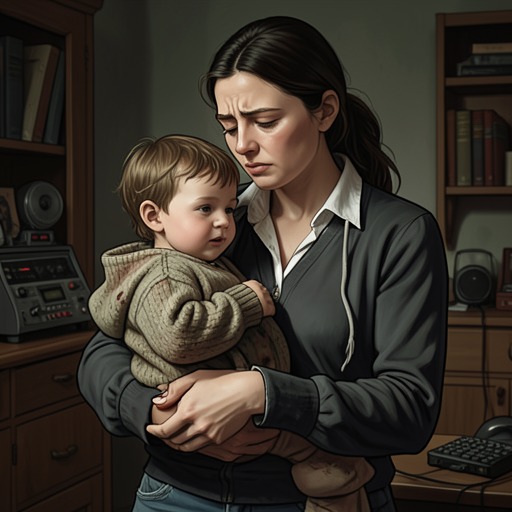
The phrase refers to the delivery of Isabella, when Cassidy’s pregnancy had appeared to proceed normally but the birth went catastrophically wrong. Medical staff initially could not control Cassidy’s bleeding, although she briefly managed to hold her newborn daughter. Derek watched them together with blurred eyes, frightened for Cassidy while overwhelmed by the sight of her happiness with Isabella. For a moment he treated the scene as normal and took a photograph, trying to preserve the family’s first shared image even as Cassidy’s sadness already registered that the moment was not safe.
The hospital room then turns abruptly from celebration to emergency. Isabella’s cries filled the room while she waved her tiny arms, and Derek’s attention shifted toward the baby until the monitor attached to Cassidy began beeping uncontrollably. He gathered Isabella into his arms, and the speed of the change fixed the event in his memory as both arrival and disappearance. The expression’s force comes from that reversal: the child’s life begins at precisely the instant Cassidy’s life is ending.
Memory, Photographs, and the Birthday
The event continues to govern Derek’s daily behavior. When he enters his home office, his gaze falls automatically on a photograph of Cassidy, and he traces the glass with his fingers. Cassidy had been the light of his life and the person most able to pull him from a bad mood; her sudden death, especially after an apparently normal pregnancy, remains a fact he cannot emotionally place in the past.
The photographs preserve contradictory versions of the same memory. One shows Cassidy holding Isabella after the birth, smiling at the baby while sadness remains visible in her eyes. Another, kept beside Derek’s bed, shows Cassidy with a large pregnant stomach, her hand resting over it as she looks toward the wooden letters of Isabella’s name above the crib. Derek studies that image each night so he will not forget Cassidy’s face, even while knowing he could never truly forget her. Isabella also keeps a photograph of Cassidy in her room, extending the mother’s presence into the daughter’s life.
At first, Isabella’s birthday was difficult for Derek to celebrate because the date carried Cassidy’s death within it. He eventually reframed the occasion rather than abandoning it. The birthday became a celebration not only of Isabella’s life but also of Cassidy and the life she had lived before that day. In this change, the expression moves from an absolute opposition between happiness and horror toward a more complicated form of remembrance in which mourning and celebration can occupy the same ritual.
The Expression as Trauma’s Repetition
Derek’s grief returns through recurrent nightmares. After Cassidy died, he experienced the same dream for months: the hospital room reappeared, but Cassidy accused him of causing her death. Derek knew that the doctors had said nothing could have predicted what happened, yet medical reassurance could not dissolve the guilt he carried. The repeated dream converts an uncontrollable medical tragedy into a personal moral indictment, giving form to his belief that closer attention in the weeks before labor might have saved Cassidy.
The nightmare changes after Derek begins wanting Indigo Drake. In the new version, Cassidy does not merely blame him; she attacks him, placing her hands around his throat and accusing him of bringing another woman into the house and bed. He wakes sweating, with his throat hurting as though the dream had been physically real. The alteration reveals that Cassidy’s death is no longer the only threat haunting him. His desire for a new relationship has become entangled with the fear that moving forward constitutes betrayal.
This is why Derek cannot treat attraction as a simple sign of recovery. Indigo reminds him of Cassidy in appearance, and their resemblance intensifies rather than resolves his conflict. He wonders whether her arrival for the nanny position, months after their first encounter, might somehow be Cassidy’s way of showing him that he can still have the family he wanted. At the same time, his nightmares and guilty conscience make the possibility feel morally dangerous. The original expression thus expands from a description of childbirth into a recurring structure of emotional reversal: hope produces fear because happiness has already once been followed by catastrophe.
From Protective Guilt to Hope
Derek’s attachment to the expression also shapes how he treats Indigo. After their first night together, Cassidy appears in a nightmare, and Derek responds by forcing Indigo away and telling her that the night was a mistake. He later admits the decision to Jacob Joyce, who reminds him that Cassidy has been gone for twelve years and that he is the one preventing himself from being with someone. Jacob redirects Derek toward Isabella’s needs, arguing that Derek must determine what kind of life Isabella wants for him rather than allowing the past to decide everything.
Derek gradually begins to recognize that fatherhood and grief do not require permanent loneliness. Life with Isabella remains the most amazing thing in the world, but he acknowledges that he misses having someone with whom to share it. His eventual response is not to erase Cassidy but to seek help: he tells Indigo that he has scheduled an appointment to talk about what has happened and states that he is trying to make the relationship work because he does not want to lose her.
The first sign of a different future arrives in sleep. After he has taken this step, Derek falls asleep without Cassidy’s screams haunting him. Instead, he imagines Indigo holding their child, an older version of that child beside Isabella, and the family continuing into old age and even the lives of great-grandchildren. The image does not replace the earlier photographs or deny the hospital room; it gives Derek another possible continuation. The peace it brings becomes hope, and Cassidy’s imagined role changes from persecuting judge to someone Derek wishes could encourage the life he is trying to live.
Repetition and Reversal in the Family Story
The expression gains another layer when Indigo’s pregnancy reaches childbirth. In the hospital, a nurse examines her and hurriedly summons the doctor; the doctor then announces that there is no time for an epidural because Indigo is ready to push. Derek immediately compares the speed of the situation with Cassidy’s delivery, showing how the present birth activates the old trauma before the new child has even arrived.
Yet the repeated setting does not produce an identical outcome within the available scene. Indigo reaches for Derek, and he takes her hand without hesitation. The gesture places him inside the birth rather than helplessly watching Cassidy’s medical crisis from the edge of it. The past remains present, but the repetition also creates the possibility of revision: the hospital no longer belongs only to the memory of death, and the phrase can begin to describe a history in which a new family life is not automatically condemned to become another loss.
As an expression, “The best day of my life suddenly became the worst as well” holds together the novel’s central emotional tension. It explains Derek’s survivor’s guilt, his fidelity to Cassidy’s memory, his fear that desire is betrayal, and his eventual movement toward treatment, love, and hope. Its decisive significance lies in refusing to separate joy from grief: Isabella’s birth is both the wound that shaped Derek and the life through which he may finally learn to continue.